By Craig Miles · Updated June 2026 · 12 min read
In March 2026, UNESCO published its annual Global Education Monitoring Report. The headline was the same one it has been for seven years running: the number of children out of school is rising. It now stands at 273 million — one in six school-age children on the planet, excluded from education entirely.
I have been thinking about this problem since before I gave my TEDx talk at Brayford Pool in 2023. And the longer I sit with the numbers, the more convinced I become that the conversation is being held in the wrong room, between the wrong people, using the wrong frame.
The development sector frames this as a resource problem. Not enough teachers. Not enough buildings. Not enough funding. Build more, train more, spend more.
I have an engineering mindset. I frame it differently. And I think the engineering frame is the one that actually leads somewhere.
This post is the most complete explanation I have written of the model I call ReachED, what it is, why I think it works, and why the technology to make it real already exists and is sitting largely unused.
Start with the actual problem
The standard narrative around the education gap focuses on enrolment. Get children into school. Build more classrooms. Train more teachers. That framing dominated the Millennium Development Goals era, and it produced genuine results; global primary enrolment rose significantly between 2000 and 2015.
But since 2015, when the Sustainable Development Goals replaced the MDGs, and SDG4 committed the world to quality education for all by 2030, the number of out-of-school children has gone in the wrong direction. It has risen every year for seven consecutive years. UNESCO’s 2026 report confirmed that at current rates, universal upper secondary completion would not be achieved until 2105 — seventy-five years after the stated deadline.
The children being left behind are not randomly distributed. They are overwhelmingly in sub-Saharan Africa, Central and Southern Asia, and conflict-affected regions. They are disproportionately in places where the terrestrial infrastructure model — roads, buildings, grid power, and salaried teachers is either too expensive to reach them or too fragile to survive.
That is not a funding problem in the conventional sense. You cannot solve a logistics and infrastructure problem by spending more on the same logistics and infrastructure model that is already failing.
That is an engineering problem. And engineering problems have engineering solutions.
What changed, and why now
Two things happened in the last decade that most of the education policy community has not yet fully processed.
The first was the Low Earth Orbit satellite revolution. The emergence of LEO satellite constellations, Starlink being the most visible, but AST SpaceMobile, OneWeb, and Amazon’s Kuiper, all part of the same shift, fundamentally changed the physics of connectivity. GEO satellites sit at 35,786 km above the Earth, producing a latency of 477–600ms. LEO satellites orbit at 160–2,000 km, with a latency of around 25–88ms. That is not just faster. It is the difference between a connection that can support real-time, interactive content and one that cannot.
More significantly, LEO constellation coverage is global. It does not require a terrestrial cell tower, a fibre cable, or a microwave backhaul link. Signal reaches places that roads do not. And direct-to-device technology, satellites communicating directly with ordinary handsets without specialist ground equipment, is advancing rapidly. The UK’s Ofcom published its D2D authorisation framework in February 2026. The regulatory and technical groundwork is being laid in real time.
The second change was the emergence of small language models capable of running offline on low-cost hardware. Models like Phi-3 Mini from Microsoft can run on a device with 4GB of RAM, with no internet connection required. They can answer questions, explain concepts, provide worked examples, and adapt to a learner’s pace and level. They are not perfect teachers. But they are patient, consistent, available at any hour, and able to operate without a single byte of data flowing to a server.
Put those two things together, and the constraint that has always defeated the infrastructure model, you cannot build a school everywhere, dissolves.
The ReachED model — what it actually is
The ReachED model is built on three components that already exist, combined in a way that has not yet been systematically deployed for education.
Component 1: LEO satellite connectivity
The satellite layer provides the ability to push curriculum content, updates, and learning materials to any point on the Earth’s surface. This does not require a permanent, always-on connection. A low-cost satellite terminal, or in the direct-to-device future, no terminal at all beyond a compatible handset, can receive content packages during a scheduled download window. Think of it as the postal system for the curriculum, except the delivery is instantaneous and the address can be anywhere.
This matters because it breaks the dependency on backhaul. In traditional mobile networks, the cell tower needs to be connected to the broader internet via fibre, microwave, or satellite links, infrastructure that is uneconomic to deploy in remote and low-income regions. LEO removes that constraint entirely. The signal comes from above.
Component 2: Offline AI tutoring
The AI layer is what makes the model functional without a teacher on site. A small language model, pre-loaded onto the device and updated periodically via the satellite link, can act as an interactive tutor. It can present curriculum content in the local language, ask comprehension questions, provide feedback on answers, identify where a learner is struggling, and adjust the difficulty and pacing accordingly.
This is not a replacement for human teaching in the long run. It is a bridging mechanism, a way to deliver structured, responsive learning to a child who has no alternative. The comparison I always reach for is the difference between a textbook and a tutor. A textbook sits there. A tutor responds. The offline AI is closer to a tutor.
Component 3: The recycled smartphone as a learning device
The device layer is deliberately low-cost and low-barrier. Hundreds of millions of smartphones are retired from use in high-income countries every year, many of them still perfectly functional. A refurbished Android handset from 2019 or 2020 has more than enough processing power to run a small language model, display curriculum content, record audio and video, and operate for a full school day on a single charge.
Solar charging resolves the grid dependency. A small panel, the kind already deployed in off-grid communities for lighting and phone charging, is sufficient to keep a device powered.
The combination of these three components is what I call the School in a Box. It is not a box in the literal sense. It is a deployable educational unit — a satellite-connected, AI-tutored, solar-powered learning system, that requires no building, no salaried teacher, no grid connection, and no terrestrial internet infrastructure.
Why am I confident this works
I want to be precise about what the evidence does and does not support, because I think credibility matters more than enthusiasm when making a claim this significant.
What the evidence clearly supports is that each of the three components works independently and reliably. LEO satellite connectivity is commercially deployed and serving millions of users. Offline small language models are running on consumer hardware today. Refurbished smartphones are already widely used as educational devices in low-income settings by organisations like Worldreader and similar initiatives.
What has not yet been done at scale is the integration of all three into a coherent, repeatable deployment model specifically designed for the out-of-school population. That is what ReachED is building toward. The system-level work — the deployment protocols, the curriculum packaging, the community integration, the measurement framework- is what remains to be done. The component technology is not the risk. The integration and the will are.
I am also aware that technology-first approaches to education in the developing world have a mixed track record. The One Laptop Per Child programme is the cautionary tale most people reach for. The lessons from that programme are real: devices without content, community context, and follow-through do not produce learning outcomes. ReachED is designed with those lessons in mind. The AI tutoring layer is specifically what OLPC lacked — a responsive, pedagogically structured interaction, not just passive access to a device.
The 2030 deadline and what it actually requires
SDG4 commits the world to inclusive, equitable, quality education for all by 2030. We have four years left. UNESCO’s own modelling, published in the 2026 GEM Report, suggests that universal upper secondary completion will not be achieved until 2105 on current trajectories.
That gap — between the 2030 commitment and the 2105 projection — is not a small miss. It is a generational failure. And it cannot be closed by doing more of what is already being done.
What it requires is a step-change in the efficiency of education delivery. Not more inputs to the same model. A different model, capable of reaching children that the existing infrastructure model structurally cannot reach.
I am not arguing that satellites and AI can replace schools, teachers, or the social infrastructure of education. I am arguing that for the 273 million children currently receiving nothing, a satellite-connected AI tutor on a recycled smartphone is not a compromise. It is a transformation.
Where the TEDx talk fits in
I gave my talk at TEDxBrayfordPool in Lincoln in 2023 to make this argument to a general audience. The response confirmed what I suspected: the idea is not hard to understand. The satellite (and the subsequent addition of AI) technology is not mystifying to people when explained clearly. What is missing is not comprehension — it is the connection between the engineering community that understands what the technology can do, and the education and development community that is trying to solve the problem.
That is the gap I am trying to close. Not just with the ReachED initiative, but with everything I write and speak about in this space. If you are an engineer reading this, I want you to see the education access problem as your problem too. If you are an educator or a development professional reading this, I want you to see the satellite and AI technology as your tool.
The interview version of the talk is 14 minutes. If you have not watched it, it is the clearest version of this argument I have made in a single sitting.
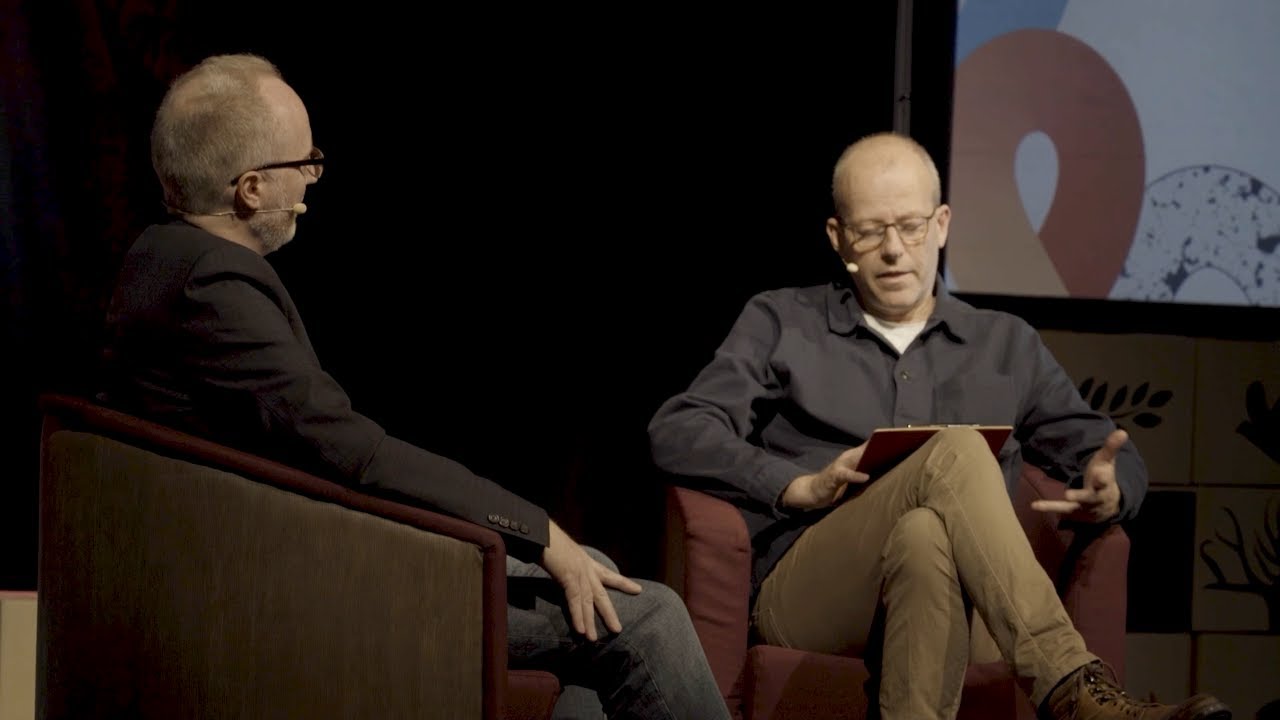
TEDxBrayfordPool 2023 · 14 minutes · Click to watch
What I am building next
ReachED is currently at the conceptual and planning stage. The work I am doing now is focused on three things: developing the theory of change that will underpin the charitable structure, identifying the right first deployment context for a proof-of-concept, and building the network of engineers, educators, and development professionals who understand why this model is different.
If you work in the satellite or LEO connectivity sector, in EdTech, in international development, or in AI, and you think this is a conversation worth having, I would like to hear from you. The contact page is the right place to start.
The technology is ready. The problem is urgent.